ServicesSiding
Siding Repair and Replacement in Wilson
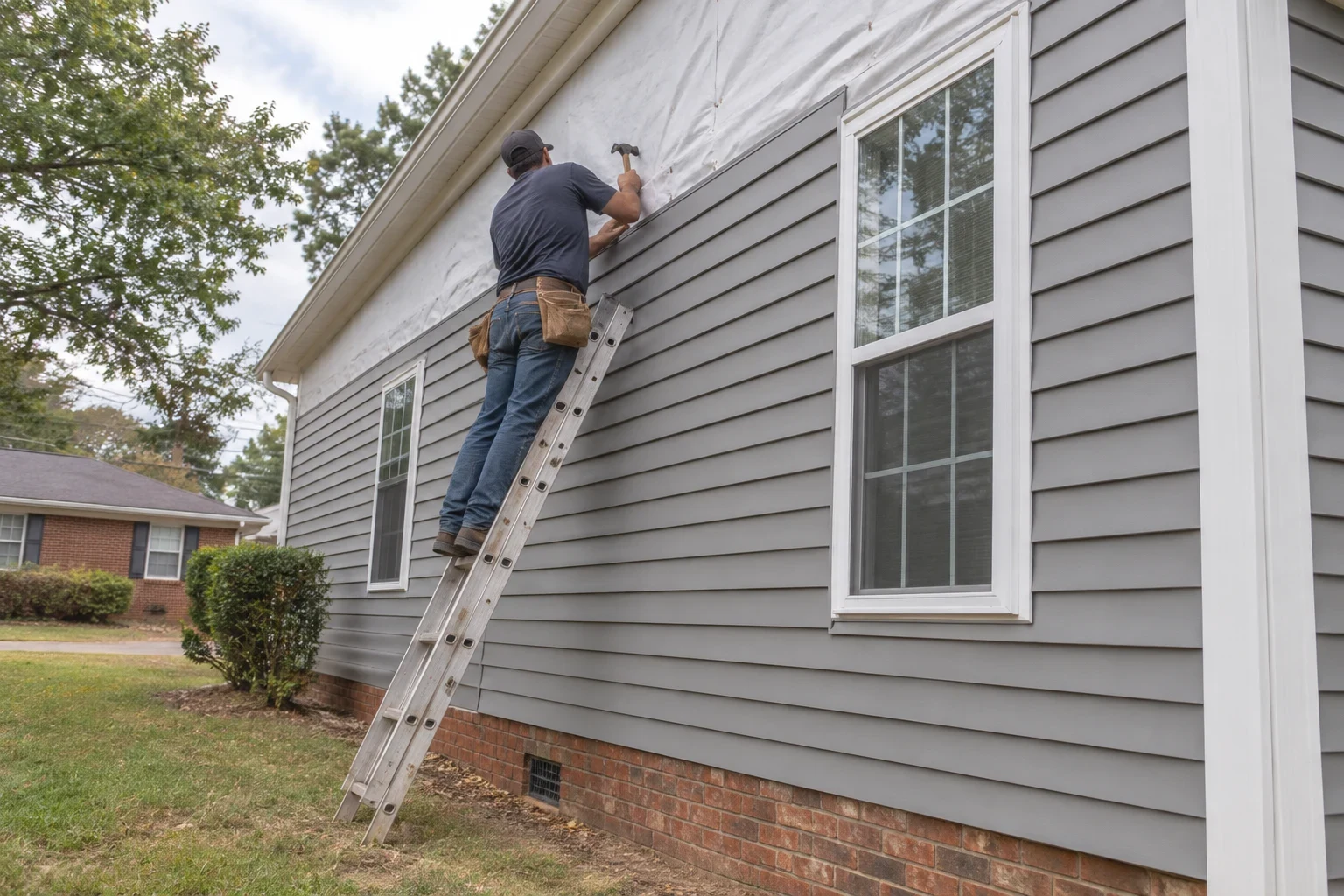
Loose panels, soft spots and faded walls let water in where you can't see it. We fix the siding and the wall behind it, cover your beds and walkways while we work, and leave the yard picked up every evening.
Siding work that keeps water out of your walls
Siding is the skin on your home. When a panel cracks or pulls loose, rain gets behind it and soaks the sheathing. That wood stays wet, then it rots, and mold follows. Most of the time the outside still looks fine until you press on it.
Some walls need a few new panels. Others are past saving and need new siding top to bottom. We tell you which one you have and show you photos so you can see it for yourself. We have been in business 10 years, and we would rather patch a wall that only needs a patch.
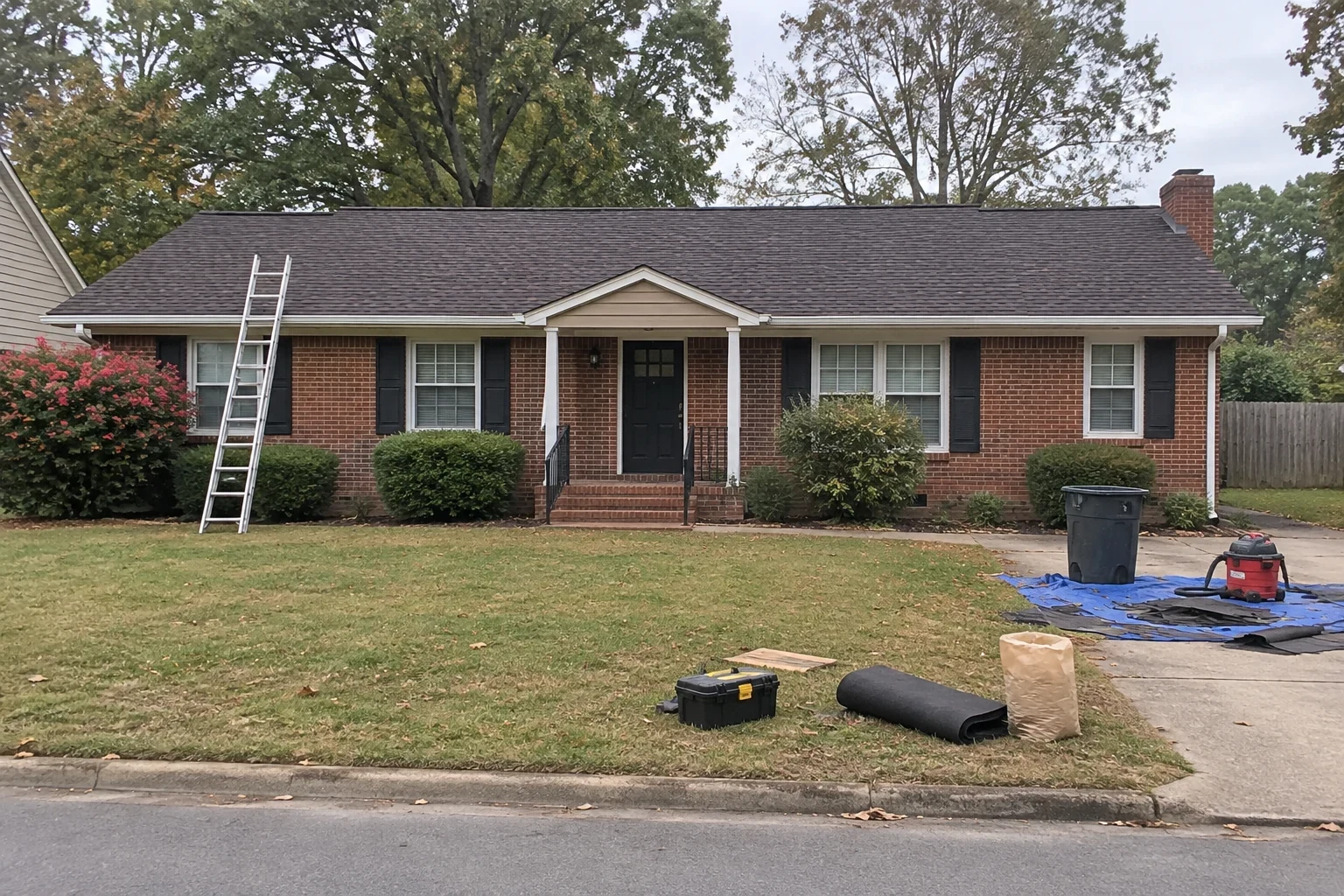
Siding work is loud and messy if nobody pays attention. Old panels, nails and cut scraps end up in the grass. We put down tarps, cover shrubs and run a magnet over the yard at the end of every day.
Siding work we handle, start to finish
Spot repairs that blend in
Cracked, bent or missing pieces come off and new ones go up. We hunt down the same profile and a close color so the fix doesn't stand out from the rest of the wall.
New siding on the whole house
The old siding comes off down to the sheathing. We repair what we find, then put up vinyl or fiber cement in the style and color you chose before anything was ordered.
Rotted sheathing and new wrap
Soft, rotted boards get cut out and replaced. A fresh weather barrier goes over the wall with every seam taped before the siding goes back on.
Flashing around doors and rooflines
Water usually gets in where siding meets a door, a corner or the edge of the roof. We flash those joints so water sheds outward and down.
Cleanup at the end of each day
Beds and the driveway stay under tarps, scrap goes in the dumpster as it comes off, and we run a magnet across the lawn and walks before we head out.
When your siding is telling you something
Loose or flapping pieces
A panel that has worked loose catches the wind and lets rain blow in behind it. Summer storms and the leftovers of hurricanes in eastern North Carolina do this to plenty of walls.
Walls that give when you push
Push on the lower part of the wall and the area around doors. Any give usually means wet or rotting wood underneath.
Ripples and bulges
Wavy vinyl was often nailed down too hard. It can't expand in the heat, so it bows and pulls apart at the seams.
Water marks indoors
A stain or bubbling paint on an inside wall, often under a window or up by the ceiling, can point to an outside wall that's letting water in.
Hail dents, cracks and holes
Hail breaks and punctures vinyl, usually on the side that faced the storm. Insurance often covers it, so have it checked before the next hard rain.
How a siding job runs
- 1
Inspection and photos
We walk every wall, press on soft spots and check the trim and flashing. You get a photo report of what we found and a written estimate line by line.
- 2
Protecting your home
Before we pull a single panel, we tarp the beds, cover the AC unit and set the dumpster where it won't block your car or crush the lawn.
- 3
Tear-off and wall repair
We remove the damaged siding, replace any rotted sheathing and put up new house wrap. If we find more rot than expected, we show you photos and talk before doing extra work.
- 4
New siding and trim
We hang the new panels with room to expand, flash every opening and finish the corners and trim.
- 5
Final cleanup and walk-through
We sweep the yard with a magnet, haul off every scrap and walk the job with you so you can check it before we call it done.
What sets the cost of a siding job
We don't put a number on a wall we haven't seen. Each part of the work shows up as its own item on your written estimate, so nothing gets lumped into one big total. Financing is available through Acorn Finance if you'd rather pay over time.
- How much wall there is
- More square footage takes more material and more hours. A second story means ladders or staging, and that slows the work down.
- Vinyl or fiber cement
- The two are priced differently and go up differently. Fiber cement weighs more, and every cut takes extra care and dust control.
- The condition underneath
- Any rotted sheathing gets replaced before new siding goes on. Nobody knows how much until the old panels are off, so we take photos and talk with you before going further.
- Doors, corners and rooflines
- A flat, open wall goes up quickly. Each door, outside corner and roof edge adds cuts and flashing time.
Common siding questions
Something not covered here? (252) 595-8656
Can a few new panels match the rest of my wall?
Usually. We bring panel samples out and hold them up against your wall to check the shape and the shade. Sun fades older vinyl, so a new piece can look a bit brighter for a while. When nothing comes close, one fix is to take original panels from a wall out of view and use them up front.
Does insurance cover hail or wind damage to siding?
It depends on your policy and what the storm did. We take pictures of every dent, crack and hole, show up when the adjuster comes out, and stay with you on the claim until the paperwork is settled. The adjuster makes the call on coverage, but you'll have dated photos to back up your claim.
How many days does new siding take?
Most houses are done in a few working days after the material shows up. Rain and extra rot behind the old panels can add time. The yard gets picked up every evening, so the days in between aren't spent stepping around scrap.
Do I have to stay home during the work?
You don't. We just ask for a clear driveway and pets kept indoors. When we're finished, we'll walk the job with you at a time that works for you.
Can you check the roof on the same visit?
Yes. Trouble often starts where the walls meet the roofline, so it makes sense to look at both. Roof repair and gutters work can be lined up with the siding job so we're not back and forth.
Want to know what's behind your siding?
We'll check every wall, press the soft spots and send you photos of what we find. If it only needs a few panels, that's what we'll tell you.